
Introduction
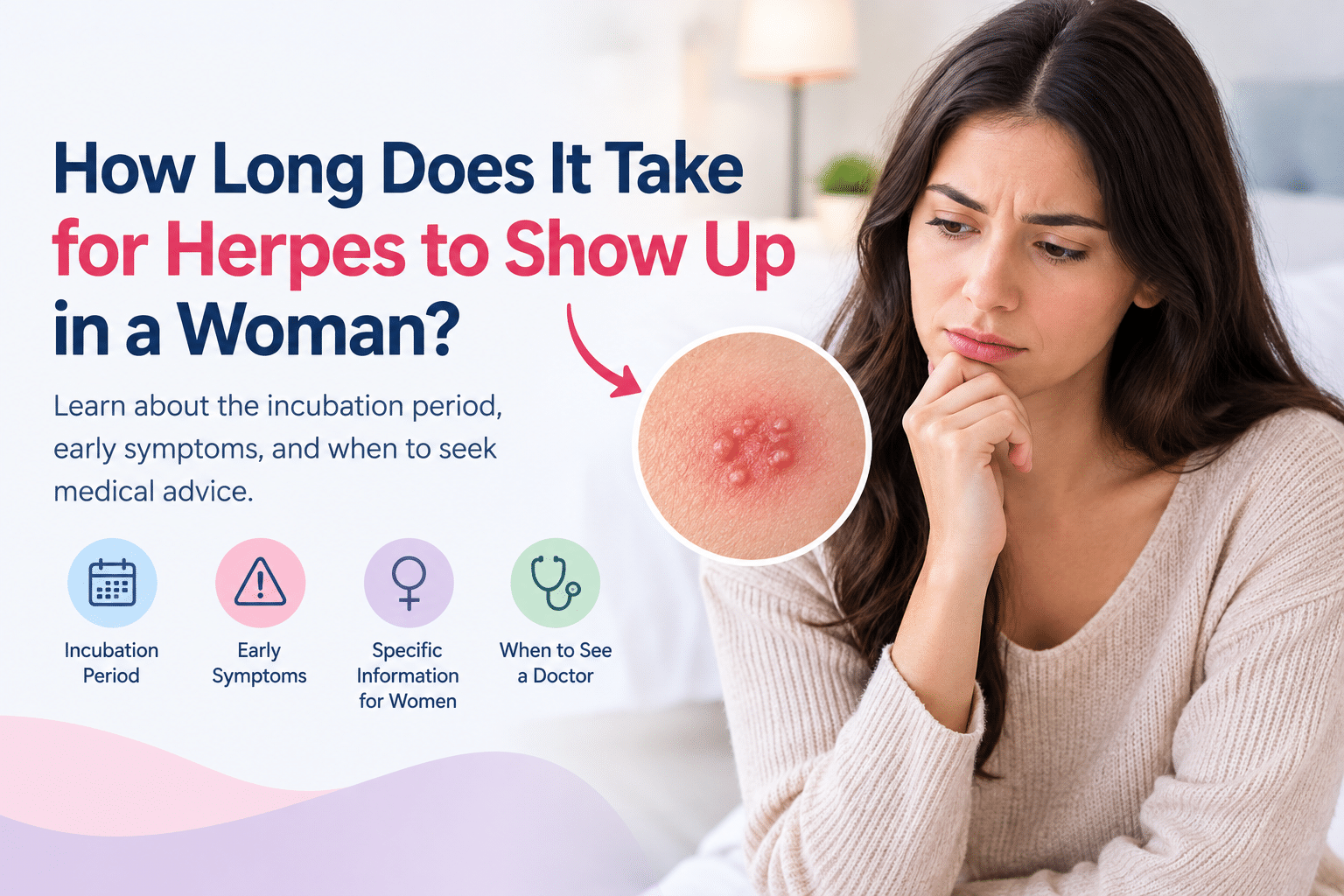
How Long Does It Take for Herpes to Show Up in a Woman. If you are wondering how long does it take for herpes to show up in a woman, the symptoms of genital herpes usually appear 2 to 12 days after exposure to the herpes simplex virus (HSV). However, not every woman develops noticeable symptoms. Some women experience mild signs that go unnoticed, while others may not recognize an infection until months or even years later.
Genital herpes is a common sexually transmitted infection (STI) caused by herpes simplex virus type 1 (HSV-1) or type 2 (HSV-2). It can cause painful blisters, sores, itching, burning, and discomfort around the genital area. The symptoms and their severity vary from person to person.
Understanding the typical incubation period, recognizing early warning signs, and knowing when to get tested can help women make informed decisions about their health.
This guide explains when herpes symptoms may appear, what the first outbreak can look like, how testing works, and when to seek medical attention.
How Long Does It Take for Herpes to Show Up in a Woman?
In most cases, the first noticeable symptoms of genital herpes develop within 2 to 12 days after exposure. Some women may experience symptoms earlier or later, and others may never notice symptoms at all.
How Long Does It Take for Herpes to Show Up in a Woman . According to the American College of Obstetricians and Gynecologists (ACOG), symptoms of a first herpes infection commonly appear around 2–10 days after the virus enters the body.
The exact timing depends on individual circumstances, including whether the infection is new, whether symptoms are mild, and whether a previous infection has gone unnoticed.
Here is a simple overview:
| Time After Exposure | What May Happen |
|---|---|
| Days 1–2 | The virus may be establishing an infection, but symptoms may not be noticeable. |
| Days 2–12 | Early symptoms may develop, including itching, tingling, burning, or blisters. |
| Following days | Blisters may break open and form painful sores. |
| Following weeks | A first outbreak may gradually heal. |
| Months or years later | An infection that was not previously recognized may become noticeable, or a recurrence may occur. |
These timeframes are general estimates, not a way to confirm when an infection occurred.
Important: Having no symptoms after 12 days does not mean a woman definitely does not have herpes. Some infections remain unnoticed, and symptoms alone cannot confirm or rule out an infection.
Source: ACOG – Genital Herpes.
What Are the Early Signs of Herpes in Women?
The first signs of genital herpes can be subtle. Some women notice discomfort before any visible blisters develop, while others experience no clear warning signs.
Recognizing possible symptoms can help you decide when to seek medical advice.
1. Tingling, Itching, or Burning
An early herpes outbreak may begin with tingling, itching, burning, or unusual sensitivity around the genital area.
These sensations can occur before blisters or sores become visible. However, they are not specific to herpes and can also occur with irritation, yeast infections, or other skin conditions.
2. Small Blisters Around the Genitals
Genital herpes may cause small, fluid-filled blisters on or around the vulva, vaginal opening, buttocks, thighs, or anus.
The location varies depending on where the virus affects the skin or mucous membranes. Some sores may be inside the vagina, making them difficult to see without a medical examination.
Blisters do not always appear in obvious clusters, and their appearance may differ across skin tones.
3. Painful Sores or Ulcers
Blisters may break open and develop into shallow, painful sores. These sores can cause discomfort when walking, sitting, wearing tight clothing, or touching the affected area.
During a first outbreak, the sores may take several weeks to heal completely.
4. Pain or Burning During Urination
Some women experience stinging or burning when urinating, particularly if urine touches open sores near the vaginal opening.
If urination becomes extremely painful or you cannot pass urine, seek urgent medical attention.
5. Swollen Lymph Nodes
The lymph nodes in the groin may become swollen or tender during a first outbreak. This can happen as the immune system responds to the infection.
6. Flu-Like Symptoms
A first outbreak may also cause symptoms such as:
- Fever
- Headache
- Muscle aches
- Fatigue
- Body discomfort
- Swollen glands
Not every woman experiences these symptoms. Some have only mild genital discomfort, while others have more noticeable symptoms.
Remember: These signs are not exclusive to herpes. A healthcare professional can help identify the cause and recommend appropriate testing.
Source: CDC – About Genital Herpes.
Can a Woman Have Herpes Without Symptoms?
Yes. A woman can have genital herpes without visible blisters, sores, or other obvious symptoms.
Many people with HSV do not know they have the infection because their symptoms are absent or very mild. Some may mistake a small sore for an ingrown hair, a pimple, or ordinary skin irritation.
Herpes can also be transmitted when an infected person has no noticeable symptoms. This is known as asymptomatic viral shedding.
Because of this, the absence of symptoms cannot establish whether a woman has herpes.
If a sexual partner has genital herpes or you believe you may have been exposed, speak with a healthcare professional about whether testing is appropriate.
The CDC’s herpes testing guidance explains why symptoms and testing history matter when assessing a possible infection.
Can Herpes Symptoms Appear Months or Years Later?
Yes. Herpes symptoms can become noticeable months or years after the virus was acquired.
There are several possible explanations:
- An unnoticed initial infection: The original infection may have caused no symptoms or signs too mild to recognize.
- A later recurrence: The virus remains in the body and can reactivate, causing another outbreak.
- A mild first episode: Symptoms may have been mistaken for another condition.
After the initial infection, herpes simplex virus remains in the body. It can become inactive for periods and reactivate later.
This means a new outbreak does not necessarily indicate a recent infection. Likewise, symptoms alone cannot establish when the virus was acquired or identify the person who transmitted it.
If you notice new genital sores, seek medical evaluation instead of trying to determine the timing from symptoms alone.
Source: NHS – Genital Herpes.
What Does the First Herpes Outbreak Look Like in a Woman?
A first recognized outbreak may involve several small blisters or painful sores around the external genital area. Some women may also experience itching, tenderness, burning, swollen groin glands, or flu-like symptoms.
The first episode can be more uncomfortable or last longer than later outbreaks. Symptoms often develop in stages:
- Tingling, itching, or burning may occur.
- Small blisters may appear.
- The blisters may break open and form sores.
- The sores gradually heal.
Not everyone follows this pattern. Some women develop only a few mild sores, and others have no noticeable outbreak.
Herpes may also affect the skin around the anus, buttocks, or thighs. Symptoms are not always limited to the vaginal opening.
It is important not to diagnose herpes based solely on photographs or descriptions. Other conditions, including certain STIs and noninfectious skin problems, can cause similar symptoms.
READ: Golden State Warriors vs LA Clippers Match Player Stats
How Is Genital Herpes Diagnosed in Women?
A healthcare professional may recommend one of the following tests, depending on your symptoms and possible exposure.
1. Swab Test From a Sore
If a fresh blister or sore is present, a clinician can collect a sample for a herpes test, usually a PCR or another nucleic acid amplification test (NAAT).
A swab taken from an active lesion is generally the preferred method for confirming genital herpes when sores are present. Testing is usually more useful when the lesion is fresh rather than healing.
If you have a new sore, arrange an appointment promptly instead of waiting for it to disappear.
2. Herpes Blood Test
A type-specific blood test may help detect antibodies against HSV-1 or HSV-2.
However, blood testing has limitations:
- A test performed too soon after exposure may be negative even if infection has occurred.
- Some positive results may be false positives and require confirmation.
- An HSV-1 antibody result does not establish whether the infection is oral or genital.
- A blood test cannot reliably determine the exact date of infection.
The CDC notes that it can take up to 16 weeks or longer after exposure for current tests to detect infection. For suspected recent HSV-2 acquisition, its treatment guidelines recommend repeat type-specific antibody testing at 12 weeks after the presumed exposure when appropriate.
Testing decisions should be made with a qualified healthcare professional, who can explain the benefits and limitations of available tests.
Source: CDC – Screening for Genital Herpes.
What Should a Woman Do After Possible Herpes Exposure?
If you think you may have been exposed to herpes, there are practical steps you can take.
Step 1: Monitor for Symptoms
Watch for unusual genital itching, tingling, blisters, sores, or pain during urination. Do not rely on symptoms alone to determine whether you are infected.
Step 2: Contact a Healthcare Professional
If your partner has herpes or you have had a possible exposure, ask a healthcare professional whether testing is appropriate and when it should be performed.
If sores are already present, seek an examination promptly because a swab from a fresh lesion can help establish the diagnosis.
Step 3: Avoid Sexual Contact During Possible Outbreaks
Avoid vaginal, anal, and oral sexual contact when you have suspected or confirmed active genital herpes symptoms until the sores have healed and a healthcare professional has advised you about reducing transmission risk.
Condoms can lower the risk of transmission but do not eliminate it because herpes can affect skin that a condom does not cover.
Step 4: Do Not Self-Diagnose
Avoid assuming that every genital bump is herpes. Conditions such as ingrown hairs, folliculitis, yeast infections, and other STIs can cause similar symptoms.
Getting an accurate diagnosis helps you receive the right care.
Step 5: Seek Prompt Care if You Are Pregnant
If you are pregnant and suspect a new genital herpes infection, contact your obstetrician or healthcare professional promptly. A first infection during pregnancy, especially later in pregnancy, can pose risks to the newborn and requires timely medical assessment.
READ: Do Cadillac LYRIQ Driving Modes Affect Range or Battery Usage?
Can Genital Herpes Be Treated?
Yes. Although there is currently no cure that removes herpes simplex virus from the body, antiviral medicines can help manage the infection.
Common prescription antiviral medicines include acyclovir, valacyclovir, and famciclovir. A healthcare professional can determine which medicine is suitable for your circumstances.
Treatment may:
- Shorten an outbreak when started promptly.
- Reduce the severity of symptoms.
- Help prevent or reduce future outbreaks when taken as suppressive therapy.
- Lower the risk of transmitting genital HSV-2 to a sexual partner in certain circumstances.
Treatment does not eliminate the virus, and transmission may still occur without visible symptoms.
If you have a suspected first outbreak, contact a healthcare professional early. Do not use prescription antiviral medicines without appropriate medical guidance.
Source: CDC – Genital Herpes Treatment Guidelines.
Frequently Asked Questions
1. How long does it take for herpes to show up in a woman after sex?
Symptoms of genital herpes usually appear 2–12 days after exposure. However, some women never develop noticeable symptoms, and an infection may only be recognized much later.
2. Can herpes show up in 2 days?
Yes. Herpes symptoms can begin as early as approximately two days after exposure. Early signs may include itching, tingling, burning, or the appearance of small blisters.
3. Can herpes take months to show up?
Yes. An infection may go unnoticed for months or years because symptoms can be absent or very mild. A later outbreak does not necessarily mean the infection was recently acquired.
4. Can a woman have herpes without sores?
Yes. Many people with genital herpes have no noticeable sores or other symptoms. The virus can sometimes be transmitted even when the infected person feels completely well.
5. How can a woman tell if she has genital herpes?
Possible signs include painful blisters, sores, itching, burning, and pain during urination. However, symptoms alone cannot confirm the diagnosis. A clinician may recommend a swab test from a sore or, in selected circumstances, a blood test.
6. How soon should a woman get tested after herpes exposure?
If sores appear, seek medical care promptly for possible lesion testing. If there are no symptoms, discuss the appropriate testing schedule with a healthcare professional. Blood tests may not detect a recent infection immediately, and repeat testing may be recommended.
7. Can herpes symptoms appear after years with the same partner?
Yes. An infection can remain unnoticed for a long time before symptoms appear. A later outbreak does not, by itself, prove recent transmission or infidelity.
8. Is genital herpes dangerous for women?
Genital herpes is usually manageable with appropriate care, but it can cause painful outbreaks and may increase the risk of acquiring HIV. A first infection during pregnancy can also be serious for a newborn. Seek medical advice if you suspect infection, particularly during pregnancy.
9. Does herpes go away on its own?
Individual outbreaks often heal without treatment, but the virus remains in the body. Prescription antiviral medicines can help shorten outbreaks and reduce recurrence or transmission risk in appropriate circumstances.
10. Can herpes be confused with another infection?
Yes. Other STIs and skin conditions can resemble genital herpes. A medical examination and appropriate laboratory testing can help distinguish between them.
Key Takeaways
- Genital herpes symptoms typically appear 2–12 days after exposure, although timing varies.
- Some women never develop noticeable symptoms.
- Early signs can include itching, tingling, burning, blisters, and painful sores.
- Symptoms can become noticeable months or years after infection.
- A fresh-lesion swab is generally preferred when sores are present.
- Blood tests may not detect a recent infection immediately.
- Antiviral medicines can help manage symptoms, but there is no cure that eliminates the virus.
- Pregnant women who suspect a new infection should seek prompt medical care.
Conclusion
How Long Does It Take for Herpes to Show Up in a Woman .If you are asking how long does it take for herpes to show up in a woman, the usual timeframe for noticeable genital herpes symptoms is 2 to 12 days after exposure. However, not every woman experiences symptoms, and some infections remain unnoticed for months or years.
READ MORE : Pain Und er Ear Behind Jaw Bone Left Side | Causes & Relief