

Braids can keep hair organized for school, sports, and special occasions while leaving room for a girl’s own style. The best choice depends on her hair length, styling time, and whether the finished style feels comfortable. These ten ideas are starting points to discuss with a stylist or adapt at home.
10 braided hairstyle ideas
1. Loose cornrows with a simple pattern
Three to six straight-back rows give a clean everyday look. A side part or gently curved rows add interest without a complicated design. Ask the stylist to keep the hairline comfortable and avoid pulling small edge hairs into tight rows.
2. Two braided pigtails
Part the hair down the middle and make one braid on each side. This is an approachable option for a child who prefers a shorter styling session. The ends can be secured with soft bands rather than tight elastics.
3. Medium box braids
Square or rectangular sections make individual braids that can be worn down, tied back loosely, or gathered into a low bun. Medium sections are easier to manage than a large number of tiny braids. If adding extensions, discuss their weight and the child’s comfort first.
4. Knotless braids
In this technique, the stylist gradually feeds extension hair into each braid instead of starting with a bulky knot. It can create a flatter look at the roots, but the installation still should not hurt or pull. Ask for a manageable length and weight for the child’s age and routine.
5. Braided crown
A braid that follows the head like a headband keeps hair away from the face for an event. It can be paired with loose twists or a low braid at the back. A looser crown often looks just as polished as a tightly pulled one.
6. Side-swept braids
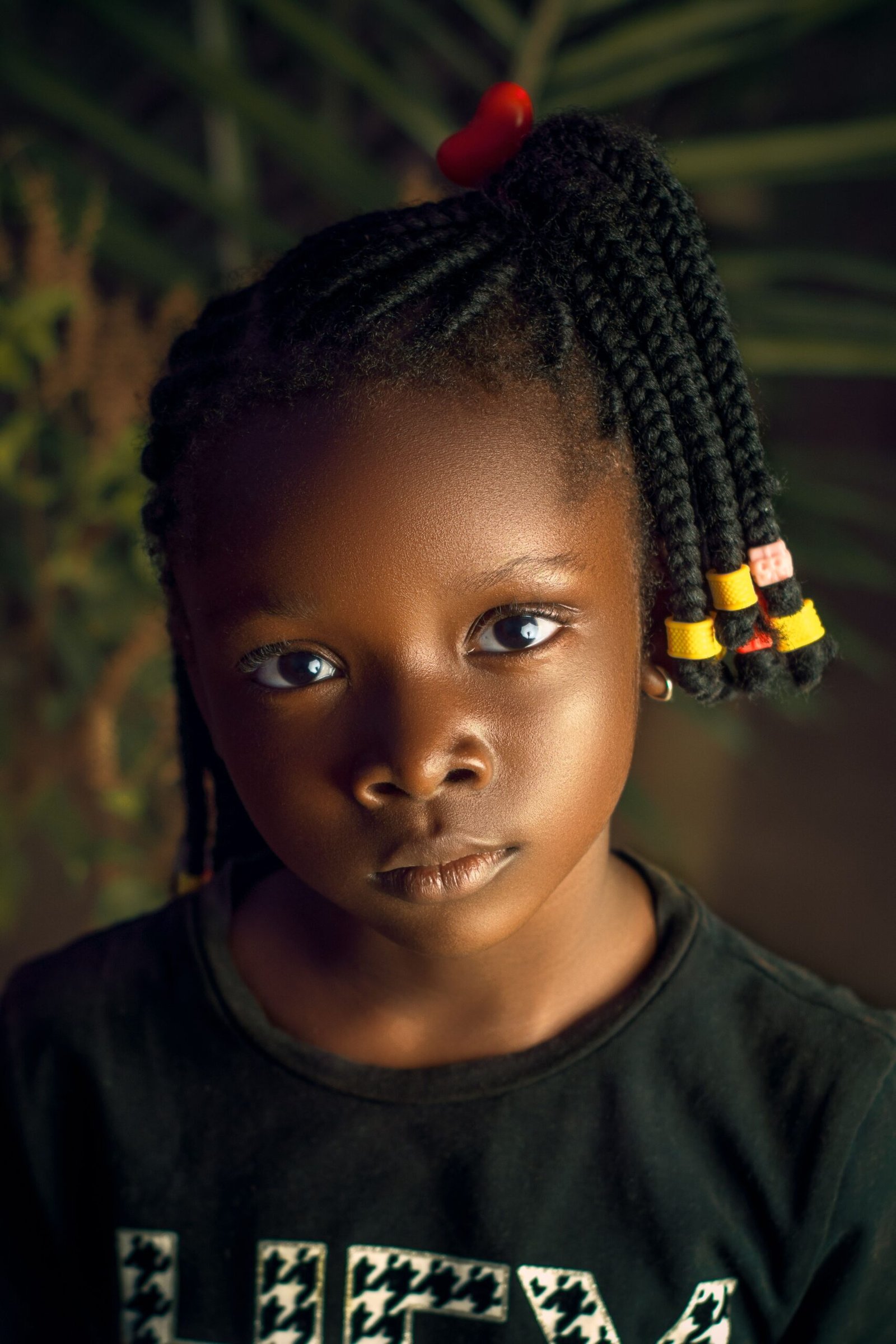
Rows angled toward one side create an asymmetrical look. This can work with natural hair or end in a few individual braids. Vary the parting pattern without relying on heavy accessories.
7. Braided low ponytail
Bring a few loose rows or individual braids toward the nape, then secure them in a low ponytail. Keeping the ponytail low and relaxed can make it more comfortable for a child who wears a hat or helmet.
8. Braids with beads
A few beads at the ends let the child choose colors for a holiday or school day. Use secure, age-appropriate accessories and check that they do not snag or add too much weight. Smaller children may be better served by simple bands.
9. Half-up braids and loose hair
Braid the front or top section and leave the rest in its natural curls or coils. This works when she wants hair out of her eyes while still showing its texture. It also offers a way to alternate between braided and unbraided sections.
10. Braided bun
Gather a few braids into a low bun for a party or a neat school look. Keep the bun loose enough that it does not pull at the temples. A bun is an occasional variation, not a reason to keep the same tight style in place every day.
How to choose a style that feels good
Start with the child’s preferences. Show her a few examples, agree on the parting and accessories, and tell the stylist if she dislikes a tight ponytail or a long appointment. A simpler style she enjoys is more useful than an elaborate one she wants removed the next morning.
During styling, pain is a sign to loosen the braid. The American Academy of Dermatology explains that repeated tension from braids, cornrows, and other pulled styles can cause traction alopecia, including in children. Vary the hairstyle, avoid continuous pulling at the same hairline, and take a break from styles that cause discomfort. If there is thinning, redness, or persistent scalp pain, ask a dermatologist or the child’s clinician to examine it rather than covering the area with another tight style.
Care between styling appointments
Keep the scalp and hair clean in a way that suits the child’s activity level and hair texture. Wash gently, use conditioner where needed, and dry the hair and scalp thoroughly after washing. The American Academy of Dermatology’s children’s hair-care guidance recommends gentle shampooing and avoiding habits that damage hair. Check braids periodically for tangles, buildup, or a band that has become too tight. When taking them down, work patiently from the ends and detangle without force.
Quick choice: Two braids or loose cornrows suit a short, simple routine; medium box braids offer styling variety; a crown or low bun works for an occasion. Whatever the pattern, comfort and scalp care should determine how it is installed and worn.