


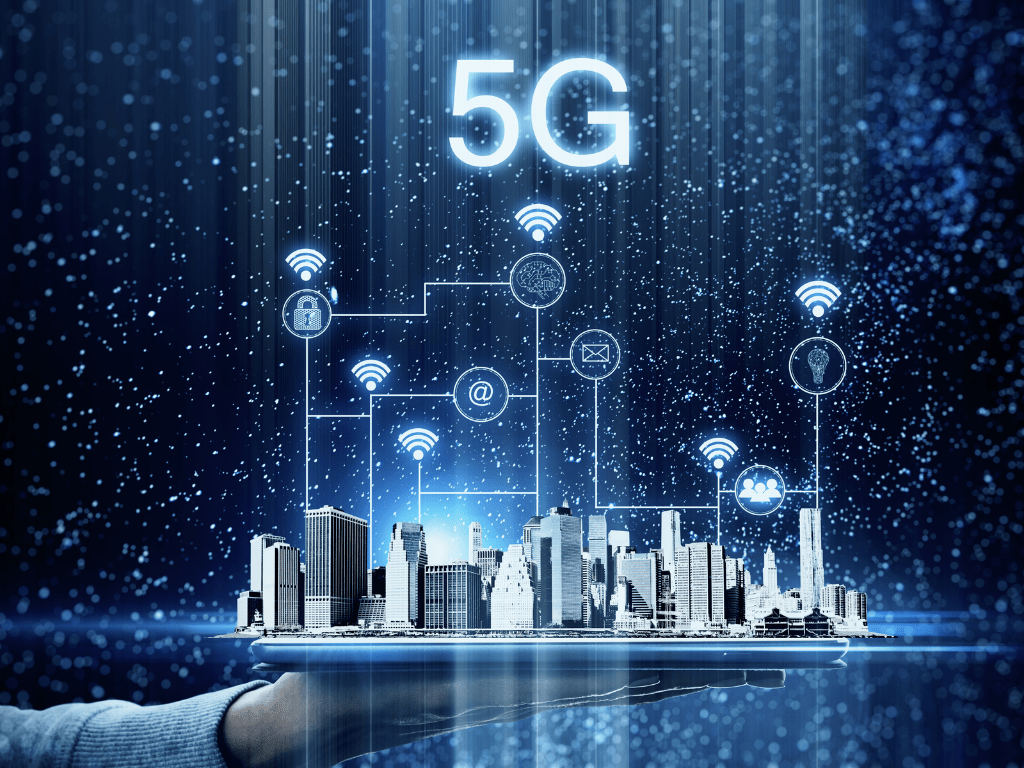
The evolution of smart cities depends heavily on fast, reliable, and intelligent communication networks. Among emerging technologies, 5G stands out as a game changer. With ultra-low latency, high data speeds, and massive device connectivity, 5G technology is reshaping how cities operate, interact, and grow. From traffic management to public safety and energy efficiency, the impact of 5G technology on smart cities is both deep and far-reaching.
This article explores how 5G enables smarter urban infrastructure, improves citizen services, and accelerates digital transformation in cities worldwide.
What Is 5G Technology?
5G is the fifth generation of mobile network technology, designed to deliver significantly faster speeds, lower latency, and higher capacity compared to previous generations. Unlike earlier networks, 5G is built to support not just smartphones but also billions of connected devices, sensors, and machines.
These capabilities make 5G a foundational layer for smart city ecosystems.
Why Smart Cities Need 5G
Smart cities rely on real-time data to function efficiently. Traditional networks struggle to handle the scale, speed, and responsiveness required for advanced urban systems. 5G solves these challenges by enabling seamless communication between devices, systems, and people.
Key advantages include:
-
Real-time data processing
-
Reliable connectivity for critical services
-
Support for large-scale IoT deployments
-
Faster response times for automated systems
Without 5G, many smart city applications would remain limited or unreliable.
Key Areas Where 5G Impacts Smart Cities
Smart Transportation and Traffic Management
5G enables real-time communication between vehicles, traffic signals, and control centers. This allows cities to:
-
Reduce traffic congestion
-
Enable smart traffic lights
-
Support autonomous and connected vehicles
-
Improve public transportation efficiency
Low latency is critical here, as even milliseconds can affect safety and flow.
Public Safety and Emergency Response
With 5G, emergency services gain instant access to high-definition video feeds, location data, and real-time analytics. This improves:
-
Emergency response times
-
Disaster management coordination
-
Surveillance and threat detection
-
Communication between agencies
Faster data transmission can directly save lives in critical situations.
Smart Energy and Utilities
5G enhances energy management by enabling smart grids and intelligent monitoring systems. Cities can:
-
Optimize power distribution
-
Reduce energy waste
-
Detect faults instantly
-
Support renewable energy integration
This leads to more sustainable and cost-efficient urban operations.
Healthcare and Smart Medical Services
Connected healthcare systems benefit greatly from 5G. Applications include:
-
Remote patient monitoring
-
Telemedicine with real-time video
-
Connected ambulances
-
AI-driven diagnostics
These innovations improve healthcare access, especially in densely populated urban areas.
Smart Infrastructure and Urban Planning
5G supports continuous monitoring of infrastructure such as bridges, roads, and buildings. Sensors can detect wear, damage, or inefficiencies early, reducing maintenance costs and improving safety.
Role of 5G in Internet of Things (IoT)
Smart cities rely on millions of IoT devices, from air-quality sensors to smart parking systems. 5G enables massive machine-type communication, allowing all these devices to operate simultaneously without network congestion.
| Smart City Component | Role of 5G | Outcome |
|---|---|---|
| Traffic Systems | Real-time data exchange | Reduced congestion |
| Smart Grids | Instant monitoring | Energy efficiency |
| Public Safety | Low-latency communication | Faster response |
| Environmental Sensors | Continuous data flow | Better sustainability |
| Smart Buildings | Automated controls | Lower operating costs |
Economic and Social Impact of 5G-Enabled Smart Cities
Beyond technology, 5G influences economic growth and quality of life.
Economic Growth
-
Attracts tech investment
-
Encourages innovation and startups
-
Creates new digital jobs
-
Improves business efficiency
Improved Quality of Life
-
Reduced commute times
-
Cleaner environment
-
Better public services
-
Safer neighborhoods
Smart cities powered by 5G are more livable, inclusive, and resilient.
5G and Digital Innovation Platforms
The speed and flexibility of 5G make it easier to deploy modern digital tools. Urban administrations increasingly combine 5G with solutions like Low Code No Code Platforms for Non Developers, enabling faster creation of citizen apps, dashboards, and service portals without heavy technical expertise.
This combination accelerates smart city innovation while reducing development costs.
Challenges of Implementing 5G in Smart Cities
Despite its benefits, 5G adoption comes with challenges:
-
High infrastructure costs
-
Network deployment complexity
-
Data privacy concerns
-
Cybersecurity risks
-
Unequal access in some regions
Addressing these issues requires strong policy frameworks, public-private partnerships, and long-term planning.
Future of Smart Cities With 5G
As 5G continues to mature, its role in smart cities will expand further. Future developments may include:
-
Fully autonomous transportation systems
-
AI-driven city management
-
Real-time digital twins of cities
-
Enhanced citizen participation platforms
5G will serve as the backbone for next-generation urban ecosystems.
FAQs: Impact of 5G Technology on Smart Cities
How does 5G improve smart city efficiency?
5G enables real-time data sharing, faster decision-making, and automation across city systems, improving overall efficiency.
Is 5G necessary for smart cities?
While basic smart systems can run on older networks, advanced smart city applications require 5G’s speed and low latency.
Does 5G increase cybersecurity risks?
Any connected system has risks, but strong security protocols and monitoring can mitigate potential threats.
How does 5G support sustainability in cities?
By optimizing energy use, traffic flow, and resource management, 5G helps reduce emissions and waste.
Will 5G benefit citizens directly?
Yes, citizens experience better services, safer environments, faster connectivity, and improved quality of life.
Final Thoughts
The impact of 5G technology on smart cities goes far beyond faster internet speeds. It acts as a foundational enabler for intelligent infrastructure, efficient services, and sustainable urban growth. As cities continue to evolve, 5G will play a central role in shaping smarter, safer, and more connected urban environments for the future.