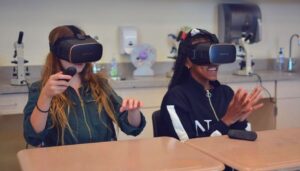
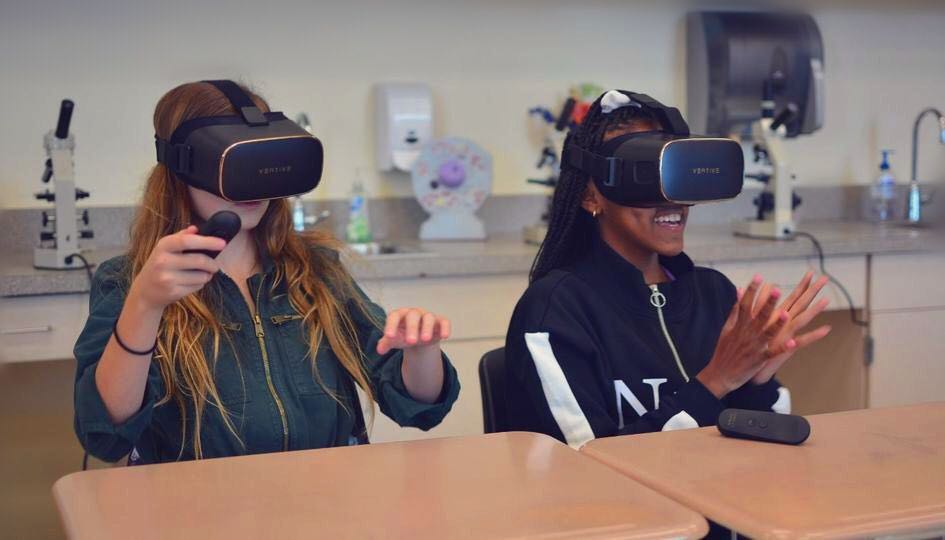
Virtual reality (VR) technology is transforming education by creating immersive and interactive learning experiences. From virtual science labs to historical simulations, VR headsets are helping students understand complex concepts in ways traditional teaching methods cannot. As technology becomes more affordable and accessible, virtual reality headsets for educational purposes are gaining popularity in schools, universities, and training institutions worldwide.
This comprehensive guide explores the benefits, features, and best options for integrating VR into educational environments.
Why Virtual Reality is Revolutionizing Education
Traditional learning methods often rely on textbooks, lectures, and static images. VR enhances these methods by allowing students to:
-
Experience immersive simulations
-
Explore 3D models of complex structures
-
Visit historical landmarks virtually
-
Conduct safe science experiments
-
Engage in interactive skill-based training
By making lessons more engaging, VR improves retention and comprehension.
Benefits of Virtual Reality Headsets for Educational Purposes
1. Enhanced Engagement
Students are more likely to stay focused when learning is interactive and immersive.
2. Improved Understanding of Complex Concepts
Subjects like anatomy, physics, and engineering become easier to understand through 3D visualization.
3. Safe Simulation Environments
Medical, aviation, and engineering students can practice procedures without real-world risks.
4. Accessibility
Students can virtually travel to museums, historical sites, and outer space without leaving the classroom.
5. Personalized Learning
VR platforms can adapt to different learning speeds and styles.
Key Features to Look for in Educational VR Headsets
When choosing VR headsets for educational use, consider the following factors:
1. Ease of Use
Headsets should be simple to set up and operate for both teachers and students.
2. Comfort
Lightweight design and adjustable straps ensure comfort during extended sessions.
3. Content Compatibility
Ensure compatibility with educational apps and platforms.
4. Durability
Devices used in classrooms should withstand regular handling.
5. Safety Controls
Parental and administrative controls help manage usage time and content.
Popular VR Headsets for Education in 2026
1. Meta Quest Series
The Meta Quest line offers standalone functionality without requiring a powerful external computer. It supports a wide range of educational applications and interactive experiences.
Best For: General classroom use and interactive lessons.
2. HTC Vive XR Elite
This headset provides high-resolution visuals and advanced tracking features, ideal for advanced technical training.
Best For: Engineering, medical, and professional training programs.
3. Pico VR Headsets
Pico devices are increasingly popular in educational institutions due to affordability and solid performance.
Best For: Budget-conscious schools and training centers.
4. PlayStation VR2 (Adapted for Learning Environments)
While primarily designed for gaming, adapted versions can be used in specialized educational programs.
Best For: Interactive storytelling and creative media courses.
Comparison Table
| VR Headset Model | Type | Best For | Ease of Setup | Ideal Education Level |
|---|---|---|---|---|
| Meta Quest Series | Standalone | General classroom use | Easy | Middle to University |
| HTC Vive XR Elite | PC-Connected | Professional & technical training | Moderate | University & Advanced |
| Pico VR | Standalone | Budget schools | Easy | All levels |
| PlayStation VR2 | Console-Based | Creative media programs | Moderate | Secondary & College |
Applications of VR in Different Subjects
Science and Medicine
Students can explore the human body in 3D, conduct virtual chemistry experiments, or simulate surgical procedures.
History and Geography
Virtual tours of ancient civilizations, world landmarks, and global ecosystems enhance understanding.
Engineering and Technical Training
Learners can interact with complex machinery or simulate construction processes.
Language Learning
Immersive VR environments allow students to practice real-life conversational scenarios.
Corporate Training
Organizations use VR to train employees in customer service, safety protocols, and leadership skills.
VR vs Traditional Learning Tools
While traditional tools remain essential, VR complements them by:
-
Increasing experiential learning
-
Encouraging active participation
-
Providing visual and kinesthetic experiences
-
Enhancing collaboration through virtual classrooms
Just as professionals use tools like Best Noise-Cancelling Headphones for Work to improve productivity, educators leverage VR to enhance learning outcomes.
Challenges of Using VR in Education
Despite its benefits, VR adoption comes with challenges:
-
Initial cost of hardware
-
Need for teacher training
-
Content development requirements
-
Potential motion sickness in some users
-
Limited session duration for younger students
Proper planning and gradual implementation help overcome these obstacles.
Future Trends in Educational VR
The future of VR in education includes:
-
AI-driven personalized learning environments
-
Integration with augmented reality (AR)
-
Cloud-based VR content libraries
-
Improved affordability
-
Advanced haptic feedback for realistic simulations
As technology advances, VR will likely become a standard tool in modern classrooms.
Frequently Asked Questions (FAQs)
1. Are VR headsets safe for students?
Yes, when used according to manufacturer guidelines and with supervised session durations.
2. What age group can use VR in education?
VR can be adapted for middle school students and above, depending on content and supervision.
3. Do VR headsets require high-end computers?
Standalone models do not require external computers, while advanced models may.
4. Is VR expensive for schools?
Costs vary, but prices are becoming more affordable as competition increases.
5. Does VR replace teachers?
No. VR enhances learning but does not replace traditional teaching methods or educators.
Conclusion
Virtual reality headsets for educational purposes are reshaping how students learn and interact with information. By offering immersive simulations, interactive experiences, and personalized learning opportunities, VR technology bridges the gap between theory and real-world application.