
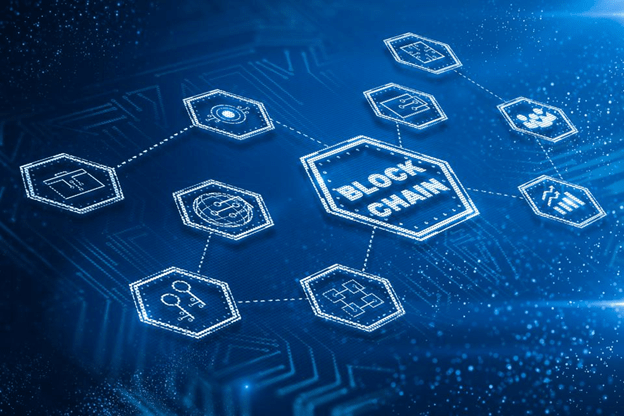
Blockchain technology is widely known as the backbone of cryptocurrencies like Bitcoin and Ethereum. However, its potential extends far beyond digital currencies. By providing decentralized, transparent, and secure systems, blockchain is transforming multiple industries, offering innovative solutions to problems ranging from supply chain management to healthcare data security.
This guide explores the key blockchain use cases beyond cryptocurrency, their benefits, and future implications.
Why Blockchain Matters Beyond Cryptocurrency
At its core, blockchain is a distributed ledger that records transactions across multiple nodes in a network. Its main features include:
-
Decentralization: No central authority controls the data.
-
Transparency: Transactions are visible and traceable.
-
Immutability: Data cannot be altered once recorded.
-
Security: Cryptography ensures data integrity and privacy.
These characteristics make blockchain ideal for applications where trust, security, and efficiency are critical.
Top Blockchain Use Cases Beyond Cryptocurrency
1. Supply Chain Management
Blockchain improves transparency and traceability across supply chains. By recording every step of a product’s journey—from manufacturing to delivery—companies can verify authenticity, reduce fraud, and optimize operations.
2. Healthcare and Medical Records
Blockchain can securely store and share patient records, ensuring privacy while improving accessibility for healthcare providers. It can also track pharmaceuticals to prevent counterfeit drugs.
3. Digital Identity Verification
Decentralized digital identities give individuals control over their personal information while reducing identity theft risks. Blockchain-based ID systems are increasingly being used for banking, government services, and online authentication.
4. Smart Contracts
Smart contracts are self-executing agreements coded on the blockchain. They automatically trigger actions when predefined conditions are met, reducing the need for intermediaries in real estate, insurance, and legal agreements.
5. Voting Systems
Blockchain can enhance election transparency and security by enabling tamper-proof digital voting. Each vote is recorded and verifiable, reducing fraud and ensuring trust in democratic processes.
6. Intellectual Property Protection
Artists, musicians, and content creators can register their work on blockchain to prove ownership and manage licensing. This helps prevent piracy and ensures fair compensation.
7. Energy Trading and Management
Blockchain allows decentralized energy trading, letting households or businesses buy and sell excess energy directly. It supports renewable energy adoption and improves grid efficiency.
8. Logistics and Transportation
By tracking shipments, blockchain improves efficiency, reduces delays, and prevents counterfeit goods from entering the market. Companies can verify the origin and condition of transported goods in real-time.
9. Financial Services Beyond Crypto
Blockchain is used for cross-border payments, fraud prevention, and secure record-keeping, reducing reliance on traditional banking intermediaries.
10. Regulatory Compliance and Auditing
Blockchain provides immutable records that simplify auditing processes, ensure compliance with regulations, and reduce human error.
Comparison of Blockchain Use Cases
| Industry | Blockchain Application | Key Benefits | Example |
|---|---|---|---|
| Supply Chain | Product tracking | Transparency, fraud reduction | Food and luxury goods |
| Healthcare | Medical records | Privacy, interoperability | Patient data sharing |
| Digital Identity | Decentralized IDs | Security, user control | Banking, government IDs |
| Legal/Real Estate | Smart contracts | Automation, cost reduction | Property transfers |
| Voting | Digital voting systems | Tamper-proof, verifiable | Elections and polls |
| Creative Arts | Intellectual property | Proof of ownership, licensing | Music, art, content |
| Energy | Decentralized energy trading | Efficiency, renewable adoption | Peer-to-peer solar energy |
| Logistics | Shipment tracking | Efficiency, counterfeit prevention | Global shipping |
| Finance | Cross-border payments | Speed, lower fees | International money transfer |
| Compliance | Auditing & recordkeeping | Accuracy, regulatory compliance | Financial audits |
Challenges and Considerations
While blockchain offers immense potential, challenges remain:
-
Scalability: Processing large volumes of transactions quickly remains a technical hurdle.
-
Energy Consumption: Some blockchain networks consume significant energy, raising environmental concerns.
-
Integration: Adopting blockchain requires alignment with existing systems and regulations.
-
Ethical Considerations: Like AI, blockchain adoption must consider privacy, fairness, and societal impact, especially when handling sensitive data. Ethical frameworks inspired by discussions around Ethical Challenges of Artificial Intelligence in 2026 can guide responsible blockchain use.
Frequently Asked Questions (FAQs)
Is blockchain only useful for cryptocurrencies?
No. While blockchain was popularized by cryptocurrencies, its decentralized, secure, and transparent features are applicable across multiple industries.
How does blockchain improve supply chains?
Blockchain provides an immutable record of every transaction and movement, reducing fraud, improving traceability, and enhancing operational efficiency.
Can blockchain protect personal data?
Yes, blockchain-based digital identity solutions give users control over their data, ensuring secure sharing and reducing the risk of identity theft.
Are blockchain solutions energy-efficient?
Some blockchain networks, particularly proof-of-work systems, consume high energy. Newer consensus methods like proof-of-stake are more sustainable.
Can blockchain replace traditional banking systems?
Blockchain can complement or disrupt traditional banking by enabling faster, cheaper, and secure transactions, but full replacement is unlikely in the near term.
Final Thoughts
Blockchain technology has evolved far beyond its cryptocurrency origins, offering transformative solutions across healthcare, supply chain, voting, energy, and digital identity. By providing transparency, security, and decentralization, blockchain enables trust and efficiency in ways previously unattainable.
As industries adopt blockchain, it is crucial to integrate ethical frameworks, robust security practices, and scalable designs to maximize benefits while minimizing risks. Drawing parallels with other emerging technologies, such as AI, can help ensure responsible innovation while unlocking blockchain’s full potential for society.