



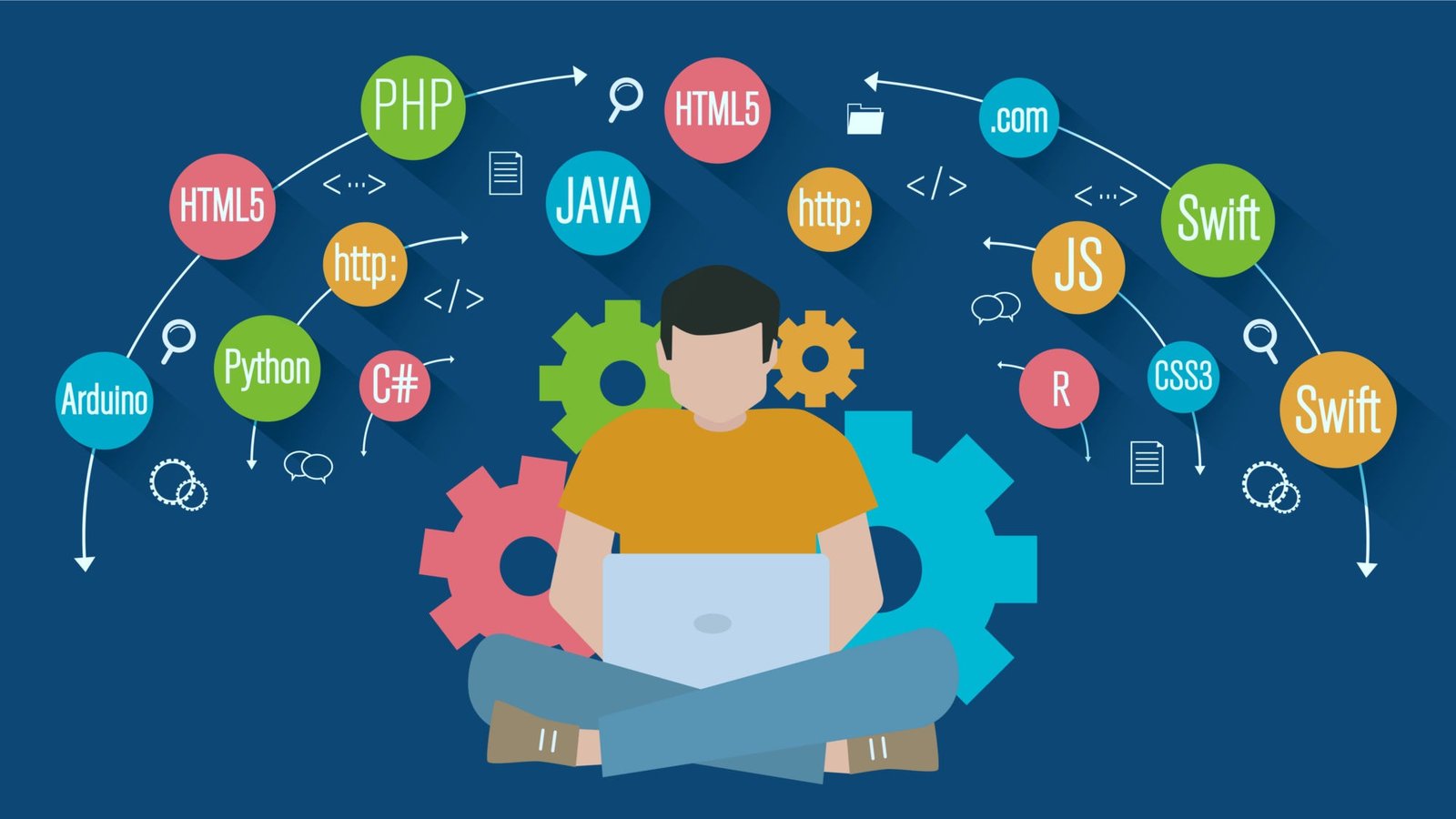
Artificial Intelligence (AI) is transforming industries, from healthcare to finance, robotics, and beyond. Choosing the best programming languages for AI development is crucial for building efficient, scalable, and cutting-edge AI applications. Whether you are a beginner or an experienced developer, understanding the strengths of different languages can help you make informed decisions.
In this guide, we’ll explore the top programming languages for AI, their features, use cases, a comparison table, and frequently asked questions.
Why Choosing the Right Language Matters
AI development involves multiple tasks, such as data analysis, machine learning, natural language processing, and computer vision. The language you select affects:
-
Development speed and efficiency
-
Library and framework support
-
Integration with other systems
-
Performance and scalability
-
Community and resources for learning
Even the Latest Innovations in Wearable Fitness Trackers rely heavily on AI-powered algorithms, making the choice of programming language critical for real-time data analysis, personalized coaching, and health monitoring.
1. Python
Python is widely regarded as the top language for AI development.
Key Features:
-
Simple, readable syntax
-
Extensive libraries for AI and ML: TensorFlow, PyTorch, Keras, Scikit-learn
-
Large developer community and resources
-
Supports rapid prototyping and experimentation
Use Cases:
-
Machine learning models
-
Natural language processing
-
AI-driven data analytics
-
Neural networks
Python’s versatility and ease of use make it a first choice for AI beginners and professionals alike.
2. R
R is a statistical programming language ideal for AI tasks that require heavy data analysis.
Key Features:
-
Advanced statistical functions
-
Excellent for data visualization
-
Strong support for machine learning packages (Caret, randomForest)
Use Cases:
-
Predictive modeling
-
Data-driven AI research
-
Bioinformatics and healthcare AI
R is preferred when your AI applications require robust statistical analysis.
3. Java
Java remains a strong contender in AI development due to its performance and scalability.
Key Features:
-
Platform-independent (write once, run anywhere)
-
Strong memory management
-
Supports large-scale AI systems
-
Libraries: Deeplearning4j, Weka, MOA
Use Cases:
-
Enterprise-level AI applications
-
Neural network implementation
-
AI-powered mobile apps
Java is ideal for production-grade AI systems where reliability is crucial.
4. C++
C++ offers high performance and is commonly used for AI applications where speed matters.
Key Features:
-
Low-level memory control
-
Efficient processing for heavy computations
-
Libraries: dlib, Shark, OpenCV for computer vision
Use Cases:
-
Real-time AI systems
-
Robotics and autonomous systems
-
AI in gaming and simulations
While C++ has a steeper learning curve, it is essential for performance-critical AI tasks.
5. Julia
Julia is a newer language designed for high-performance numerical computing.
Key Features:
-
Fast execution and parallel computing
-
Built-in support for mathematical functions
-
Growing AI libraries: Flux.jl, Knet.jl
Use Cases:
-
Machine learning and neural networks
-
Scientific computing
-
AI research requiring speed and large-scale computations
Julia is gaining traction for AI research projects that need both speed and flexibility.
6. JavaScript
JavaScript may not be traditionally associated with AI, but its use is expanding in web-based AI applications.
Key Features:
-
Can run AI models in the browser
-
Libraries: TensorFlow.js, Brain.js
-
Great for interactive, web-based AI projects
Use Cases:
-
AI-powered websites
-
Real-time visualizations
-
Front-end AI applications
JavaScript is especially useful for integrating AI into web applications and user interfaces.
Comparison Table of AI Programming Languages
| Language | Strengths | Weaknesses | Best For |
|---|---|---|---|
| Python | Easy syntax, extensive libraries | Slower performance than C++ | General AI, ML, NLP |
| R | Statistical analysis, visualization | Less suitable for large-scale apps | Data analytics, research |
| Java | Scalable, reliable | Verbose syntax | Enterprise AI, mobile AI |
| C++ | High performance | Steep learning curve | Robotics, real-time AI |
| Julia | Fast, parallel computing | Smaller community | AI research, scientific computing |
| JavaScript | Web integration | Limited ML libraries | Browser-based AI, front-end AI |
Tips for Learning AI Programming
-
Start with Python for simplicity and library support
-
Practice with real datasets and projects
-
Learn relevant AI frameworks: TensorFlow, PyTorch, Keras
-
Explore AI challenges like Kaggle competitions
-
Integrate AI models into practical applications, such as wearable devices, similar to how the Latest Innovations in Wearable Fitness Trackers rely on real-time data analytics
Frequently Asked Questions (FAQs)
1. Which language is best for beginners in AI?
Python is highly recommended due to its simple syntax, strong community, and extensive AI libraries.
2. Can I use multiple languages in one AI project?
Yes. It’s common to use Python for ML models and C++ or Java for production deployment.
3. Is R better than Python for AI?
R excels at statistical analysis, but Python offers broader AI and ML capabilities.
4. Do I need to know C++ for AI?
Not always, but C++ is beneficial for performance-intensive AI applications like robotics or real-time systems.
5. Are AI programming languages future-proof?
Languages like Python, Julia, and Java continue to evolve, making them reliable choices for long-term AI development.
Final Thoughts
Choosing the best programming languages for AI development depends on your goals, project requirements, and preferred workflows. Python dominates due to its ease of use, but languages like Java, C++, R, Julia, and even JavaScript have unique strengths for specialized applications.