



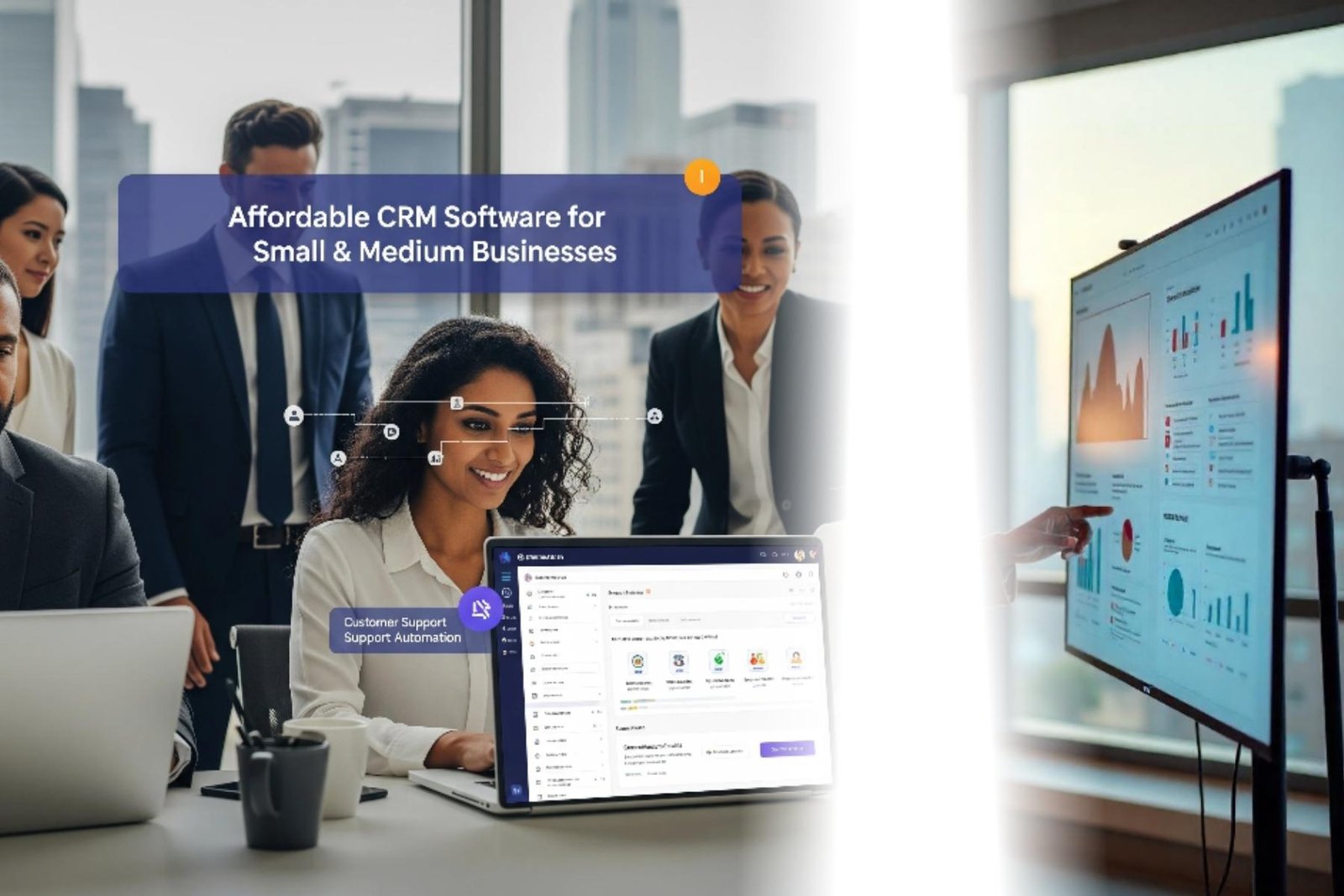
Running a small tech startup can be exciting, but managing customer relationships efficiently is often a challenge. Startups usually operate with limited budgets and small teams, making it essential to use tools that maximize productivity without high costs. This is where affordable CRM software becomes essential.
Customer Relationship Management (CRM) software helps businesses organize contacts, track leads, manage sales pipelines, automate communication, and improve customer satisfaction. For small tech startups, choosing the right CRM solution can significantly improve growth, efficiency, and revenue.
This article explores the importance of affordable CRM software for startups, the key features to look for, and the best options available for growing tech businesses.
What is CRM Software?
CRM software is a system that helps businesses manage interactions with customers, prospects, and leads. It stores important information such as contact details, communication history, purchase records, and support tickets in one centralized platform.
Instead of tracking everything in spreadsheets or emails, startups can use CRM tools to streamline customer data and improve collaboration across teams.
Why Small Tech Startups Need CRM Software
Many startups delay adopting CRM systems, thinking they are only for large companies. However, using CRM early can create a strong foundation for business growth.
Here are several reasons why startups should use CRM software:
1. Organized Customer Data
All customer information is stored in one place, making it easy to access and update.
2. Improved Sales Tracking
CRM systems allow teams to monitor leads, deals, and sales progress.
3. Better Customer Communication
Automated emails, reminders, and follow-ups help maintain consistent communication.
4. Increased Productivity
Teams spend less time on manual data entry and more time on business development.
5. Scalability
Many CRM platforms grow with your startup, allowing you to add features as the company expands.
Key Features to Look for in Affordable CRM Software
Not every CRM tool is suitable for small tech startups. When selecting a CRM, consider features that provide maximum value without increasing operational costs.
1. Contact Management
A good CRM should store and organize customer details such as names, emails, phone numbers, and interaction history.
2. Sales Pipeline Tracking
This feature allows startups to visualize where each lead stands in the sales process.
3. Automation Tools
Automation reduces repetitive tasks like sending follow-up emails or updating deal stages.
4. Integration Options
Your CRM should integrate with tools like email marketing platforms, project management software, and customer support systems.
5. Reporting and Analytics
Analytics help startups understand sales performance and customer behavior.
6. Cloud Accessibility
Cloud-based CRM tools allow teams to access data from anywhere.
Best Affordable CRM Software for Small Tech Startups
Below is a comparison of some popular and budget-friendly CRM tools suitable for startups.
| CRM Software | Starting Price | Key Features | Best For |
|---|---|---|---|
| HubSpot CRM | Free plan available | Contact management, email tracking, pipeline management | Early-stage startups |
| Zoho CRM | Low-cost paid plans | Workflow automation, analytics, integrations | Growing startups |
| Freshsales | Affordable monthly plans | AI lead scoring, sales automation | Tech sales teams |
| Pipedrive | Budget-friendly | Visual sales pipelines, deal tracking | Sales-focused startups |
| Agile CRM | Free plan + low pricing | Marketing automation, customer service tools | Small teams |
These platforms provide essential CRM functions without overwhelming small businesses with unnecessary complexity.
How CRM Software Helps Tech Startups Grow
1. Lead Management
Tech startups often generate leads through websites, social media, and marketing campaigns. CRM software automatically collects and organizes these leads, ensuring none are lost.
2. Sales Optimization
With pipeline tracking, sales teams can see which prospects need follow-ups and which deals are close to closing.
3. Data-Driven Decisions
Analytics dashboards help founders understand sales trends, customer behavior, and revenue patterns.
4. Improved Customer Experience
When all customer interactions are tracked in one place, businesses can provide faster and more personalized responses.
Cost Considerations for Startup CRM Systems
Startups should carefully evaluate pricing structures before choosing a CRM system. Many platforms offer:
-
Free starter plans
-
Low monthly subscriptions
-
Pay-per-user pricing models
-
Scalable upgrades as the business grows
Affordable solutions allow startups to implement professional customer management without exceeding their budget.
Even companies that focus on emerging sectors such as Affordable Smart Home Technology Devices for Apartments can benefit from CRM systems by tracking customer inquiries, product interest, and post-sale support requests.
Tips for Choosing the Right CRM for Your Startup
Selecting the best CRM depends on your startup’s specific needs. Consider the following tips before making a decision:
Evaluate your team size
Choose a CRM that supports collaboration without complex setup.
Start with a free trial
Testing the software helps determine whether it fits your workflow.
Check scalability
Make sure the CRM can grow with your startup.
Prioritize ease of use
A simple interface ensures faster adoption among team members.
Look for integrations
Compatibility with marketing, email, and support tools is essential.
Common Mistakes Startups Make When Choosing CRM
Many startups rush into selecting CRM software and later face difficulties. Avoid these common mistakes:
-
Choosing overly complex enterprise solutions
-
Ignoring integration capabilities
-
Not training team members properly
-
Failing to clean and organize customer data
-
Underestimating future business growth
By selecting the right CRM from the start, startups can avoid costly migrations later.
Future of CRM for Small Tech Companies
CRM technology is evolving rapidly. Modern systems are incorporating artificial intelligence, predictive analytics, and automation to make customer management even more efficient.
In the future, startups will benefit from:
-
AI-powered sales forecasting
-
Automated customer engagement
-
Advanced personalization
-
Deeper integration with marketing tools
-
Enhanced mobile CRM capabilities
These innovations will help small tech startups compete with larger companies by improving customer relationships and operational efficiency.
Frequently Asked Questions (FAQs)
1. What is the best affordable CRM for startups?
HubSpot CRM and Zoho CRM are among the most popular affordable options. They offer free or low-cost plans with essential features suitable for small businesses.
2. Do small startups really need CRM software?
Yes. Even small startups benefit from organized customer data, sales tracking, and automated communication provided by CRM systems.
3. Is free CRM software enough for startups?
For early-stage startups, free CRM tools often provide enough functionality. However, growing companies may eventually require advanced features available in paid plans.
4. How long does it take to implement CRM software?
Most cloud-based CRM systems can be set up within a few hours or days, depending on the complexity of your data and integrations.
5. Can CRM software improve customer retention?
Yes. CRM tools help businesses track customer interactions, personalize communication, and respond quickly to issues, which improves customer satisfaction and retention.
Conclusion
Affordable CRM software is a powerful tool for small tech startups aiming to grow efficiently. By organizing customer data, improving sales processes, and automating communication, CRM systems enable startups to focus on innovation and business expansion.