


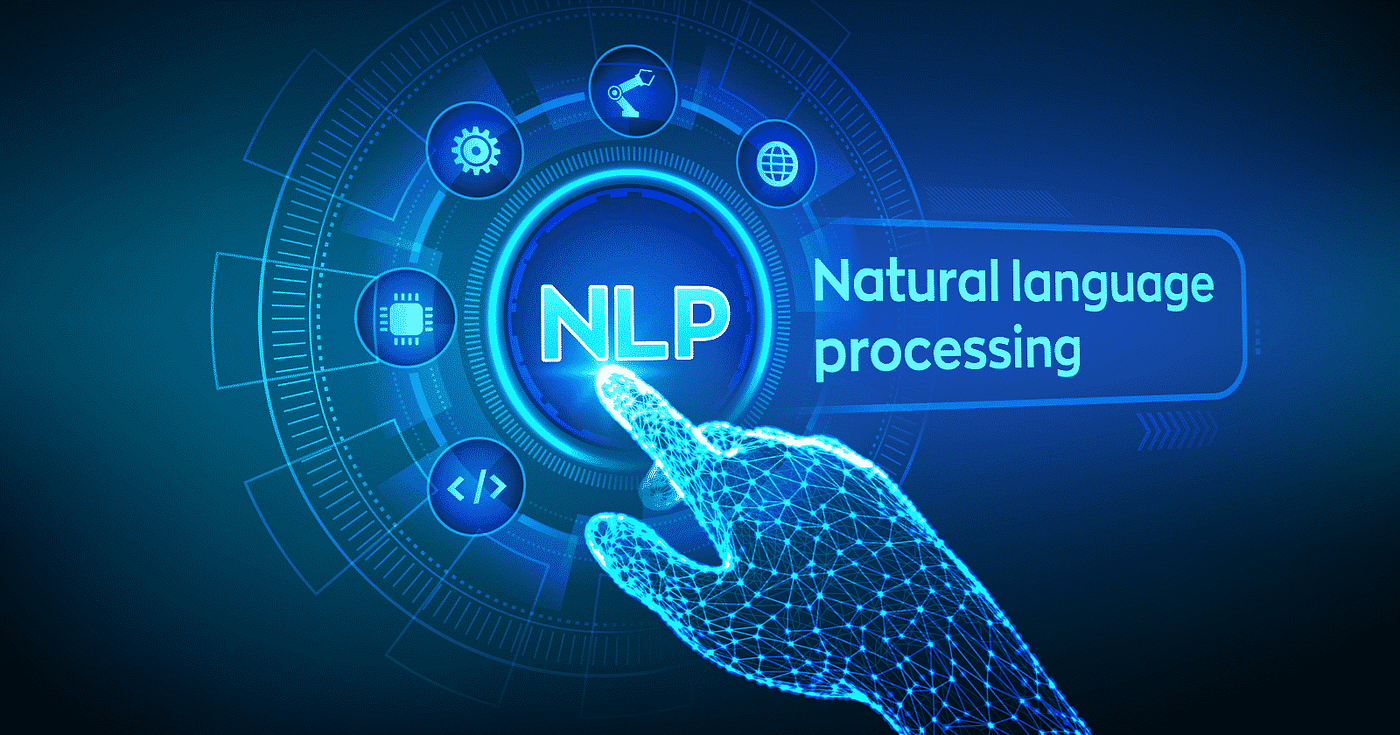
Startups are increasingly leveraging artificial intelligence to gain a competitive edge, and one of the most powerful AI technologies available today is natural language processing (NLP). NLP enables machines to understand, interpret, and generate human language, providing startups with the ability to automate tasks, enhance customer interactions, and extract valuable insights from text data.
From chatbots and sentiment analysis to document summarization and personalized recommendations, NLP tools are transforming how startups approach customer engagement, operations, and decision-making. This article explores the most effective NLP tools for startups, their key features, benefits, and practical applications.
What Is Natural Language Processing?
Natural language processing is a branch of artificial intelligence that focuses on the interaction between computers and human language. NLP combines linguistics, computer science, and machine learning to process and analyze text or speech.
Core NLP tasks include:
-
Text classification and sentiment analysis
-
Named entity recognition (NER)
-
Language translation and transcription
-
Summarization of documents or content
-
Question answering and conversational AI
For startups, NLP can unlock efficiency, automate workflows, and improve customer experiences at a scale that would be difficult to achieve manually.
Benefits of NLP Tools for Startups
Enhanced Customer Support
NLP-powered chatbots and virtual assistants can handle customer queries, providing instant responses while reducing the burden on human support teams.
Data-Driven Insights
Startups can analyze customer reviews, social media posts, or survey responses to uncover trends, sentiment, and opportunities.
Marketing Personalization
NLP tools can help startups understand customer preferences and generate tailored messages, increasing engagement and conversion rates.
Improved Productivity
Automating tasks like email filtering, document summarization, or transcription allows small teams to focus on strategic initiatives.
Competitive Advantage
Startups that leverage NLP early can improve decision-making, customer engagement, and operational efficiency, giving them a significant edge over competitors.
Key Features to Look for in NLP Tools
When evaluating NLP solutions, startups should consider the following features:
Multi-Language Support
Supports multiple languages to serve a global audience.
Real-Time Processing
Enables instant analysis or response for chatbots, customer support, and other real-time applications.
Pretrained Models and APIs
Prebuilt models for sentiment analysis, classification, and text summarization accelerate development.
Customization
Ability to train models on domain-specific data for higher accuracy.
Integration Capabilities
Compatibility with messaging platforms, CRMs, cloud services, and analytics dashboards.
Popular NLP Tools for Startups
Several NLP platforms and libraries are particularly well-suited for startups looking to deploy AI quickly and cost-effectively.
spaCy
spaCy is an open-source NLP library for Python, ideal for startups that need fast and efficient text processing.
Key features:
-
Named entity recognition, tokenization, and part-of-speech tagging
-
Pretrained pipelines for multiple languages
-
Easy integration with Python-based workflows
-
Extensible architecture for custom NLP models
spaCy is particularly valuable for startups that already rely on Python-based development, much like those using AI Tools for Coding Assistance in Python.
Hugging Face Transformers
Hugging Face provides a library of pretrained transformer models for NLP tasks such as text classification, summarization, and question answering.
Key benefits:
-
Access to cutting-edge models like BERT, GPT, and RoBERTa
-
Easy fine-tuning on domain-specific datasets
-
Integration with Python and deep learning frameworks like PyTorch and TensorFlow
-
Strong developer community and open-source support
Hugging Face is ideal for startups that want state-of-the-art NLP without building models from scratch.
Google Cloud Natural Language API
Google Cloud NLP API provides cloud-based NLP capabilities with minimal setup.
Features include:
-
Sentiment analysis, entity recognition, and syntax analysis
-
Multi-language support
-
Integration with Google Cloud ecosystem
-
Scalable cloud infrastructure for growing startups
This tool is suitable for startups that need a fully managed solution without managing machine learning infrastructure.
IBM Watson Natural Language Understanding
IBM Watson NLU provides NLP services with advanced analytics and AI-driven insights.
Key advantages:
-
Text analysis for sentiment, emotion, and entities
-
Keyword extraction and concept detection
-
Pretrained and customizable models
-
Integration with other IBM AI tools
Watson NLU is often used by startups looking for enterprise-level NLP capabilities with flexible APIs.
Amazon Comprehend
Amazon Comprehend is a cloud-based NLP service from AWS designed for text analysis and language understanding.
Features include:
-
Entity recognition and sentiment analysis
-
Topic modeling and key phrase extraction
-
Automatic language detection
-
Integration with AWS analytics and storage services
Amazon Comprehend is ideal for startups already building applications on AWS.
Comparison Table of NLP Tools
| Tool | Best For | Key Features | Cost Model |
|---|---|---|---|
| spaCy | Python-based NLP | Tokenization, NER, customizable models | Open-source |
| Hugging Face | Advanced NLP tasks | Pretrained transformers, fine-tuning | Free & Paid options |
| Google Cloud NLP | Cloud-based NLP | Sentiment, entity recognition, multi-language | Pay-as-you-go |
| IBM Watson NLU | Enterprise analytics | Sentiment, emotion, keyword extraction | Subscription |
| Amazon Comprehend | AWS-integrated apps | Entity & sentiment analysis, topic modeling | Pay-as-you-go |
How Startups Can Implement NLP
Identify Use Cases
Focus on high-impact areas such as customer support automation, sentiment analysis, content summarization, or lead scoring.
Choose the Right Tool
Select an NLP platform that aligns with your startup’s technical expertise, scalability needs, and budget.
Train or Fine-Tune Models
For domain-specific accuracy, consider fine-tuning pretrained models on your own data.
Integrate With Applications
Connect NLP services with chatbots, CRMs, dashboards, or marketing automation tools.
Monitor and Optimize
Track performance metrics, user feedback, and model accuracy to continuously improve NLP implementations.
FAQs
What is natural language processing?
NLP is a branch of AI that enables computers to understand, interpret, and generate human language.
Can NLP work for small startups?
Yes. Cloud-based NLP APIs and open-source libraries allow startups to implement NLP without large teams or infrastructure.
What programming languages support NLP?
Python is the most popular language due to libraries like spaCy and Hugging Face, but Java, R, and JavaScript also have NLP support.
Are NLP tools expensive for startups?
Many tools have free tiers or open-source options, making them accessible for startups with limited budgets.
How can NLP improve customer engagement?
NLP powers chatbots, sentiment analysis, and personalized messaging, allowing startups to interact with customers more efficiently and effectively.
Conclusion
Natural language processing tools are indispensable for startups aiming to leverage AI to improve operations, customer interactions, and data-driven decision-making. Platforms like spaCy, Hugging Face, Google Cloud NLP, IBM Watson NLU, and Amazon Comprehend provide flexible, scalable, and effective solutions for startups of all sizes.
By incorporating NLP, startups can automate repetitive tasks, extract meaningful insights, and enhance customer engagement while saving time and resources. When combined with other AI innovations, including AI Tools for Coding Assistance in Python, NLP becomes a powerful enabler for building smarter, more efficient, and innovative products.