



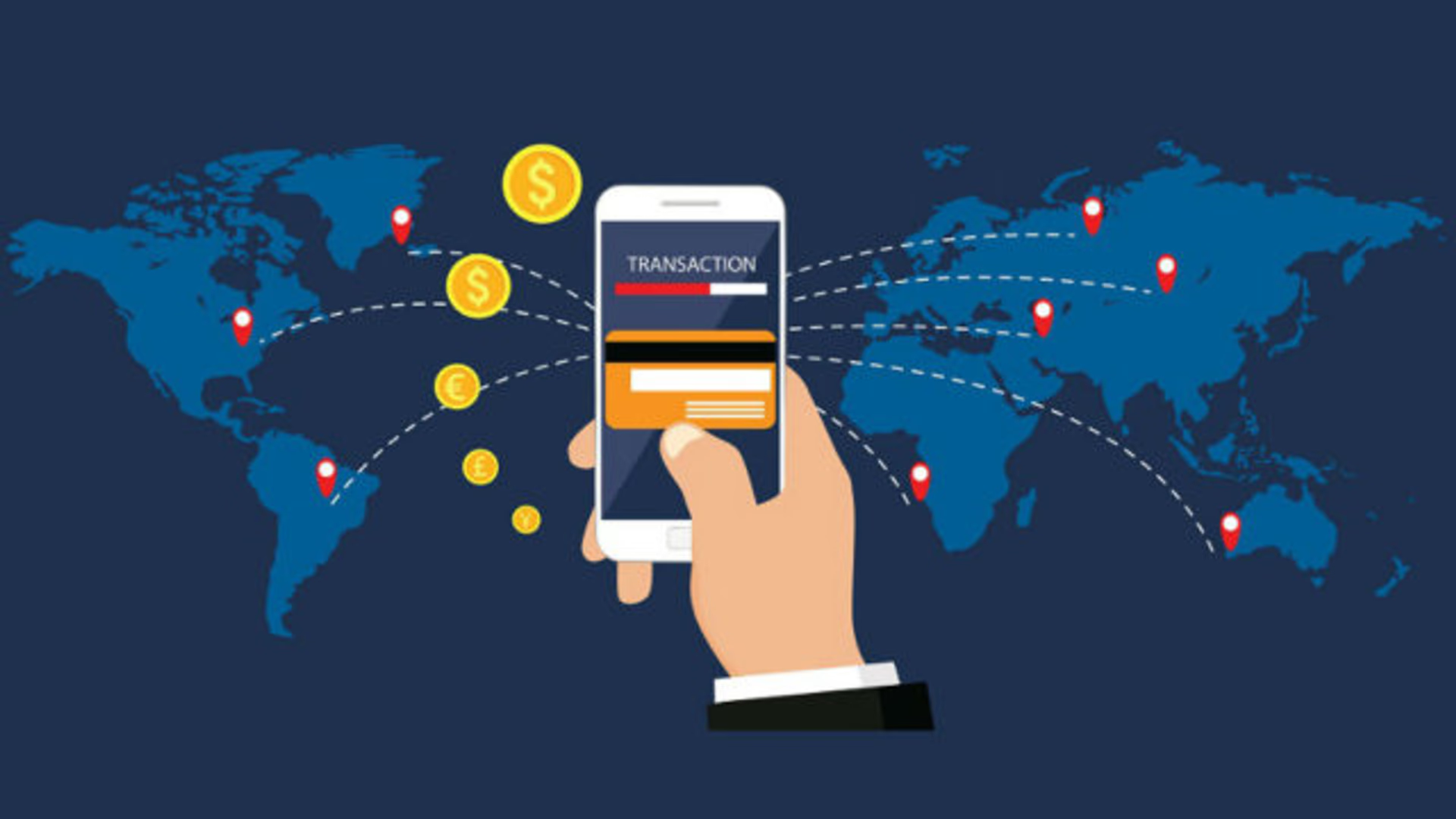
The global financial sector is undergoing a dramatic transformation, and blockchain technology is at the center of this evolution. From faster cross-border payments to enhanced transparency and fraud prevention, blockchain is reshaping traditional banking models. As financial institutions compete in an increasingly digital world, understanding how blockchain technology is changing banking systems has become essential for businesses, startups, and consumers alike.
In this comprehensive guide, we will explore how blockchain works, its impact on banking operations, key benefits, real-world use cases, challenges, and what the future holds for financial institutions.
What Is Blockchain Technology?
Blockchain is a decentralized digital ledger that records transactions across multiple computers in a secure and tamper-proof manner. Unlike traditional centralized databases used by banks, blockchain distributes data across a network of nodes. Every transaction is verified through consensus mechanisms and permanently recorded in blocks linked together chronologically.
This structure ensures transparency, immutability, and high-level security—features that are critical in financial systems.
How Blockchain Technology Is Changing Banking Systems
1. Faster Cross-Border Payments
Traditional international payments often take several days due to intermediary banks and clearing systems like SWIFT. Blockchain eliminates many of these intermediaries, enabling near-instant global transactions.
Financial institutions are increasingly partnering with blockchain platforms such as Ripple to process cross-border payments in seconds rather than days, reducing transaction costs significantly.
2. Enhanced Security and Fraud Prevention
Cybersecurity threats remain one of the biggest concerns in banking. Blockchain’s decentralized structure makes it extremely difficult for hackers to manipulate transaction records. Each block contains a cryptographic hash of the previous block, making data tampering nearly impossible.
This level of security reduces fraud, unauthorized access, and identity theft—major challenges faced by banks worldwide.
3. Improved Transparency and Auditability
Blockchain creates a transparent transaction history accessible to authorized participants. Auditors and regulators can verify transactions in real time without relying on manual documentation.
Banks such as JPMorgan Chase are already exploring blockchain-based systems to improve transaction monitoring and regulatory compliance.
4. Smart Contracts for Automated Processes
Smart contracts are self-executing agreements coded directly onto the blockchain. These contracts automatically execute transactions once predefined conditions are met.
In banking, smart contracts are used for:
-
Loan approvals
-
Trade finance
-
Insurance claim settlements
-
Asset transfers
Platforms like Ethereum enable the creation of complex financial smart contracts that reduce manual paperwork and operational costs.
5. Reduced Operational Costs
Banks traditionally spend billions on infrastructure, reconciliation processes, and compliance management. Blockchain streamlines these operations by eliminating intermediaries and reducing paperwork.
By automating transaction verification and record-keeping, financial institutions can significantly lower administrative expenses while improving efficiency.
Key Benefits of Blockchain in Banking
Below is a summary of how blockchain technology is changing banking systems in measurable ways:
| Feature | Traditional Banking | Blockchain-Based Banking |
|---|---|---|
| Transaction Speed | 2–5 days (international) | Minutes or seconds |
| Transparency | Limited | High and real-time |
| Security | Centralized databases | Decentralized and encrypted |
| Costs | High intermediary fees | Reduced processing costs |
| Fraud Risk | Moderate to high | Significantly lower |
This comparison clearly demonstrates why banks are investing heavily in blockchain innovation.
Real-World Applications in the Banking Sector
Cross-Border Remittances
Global remittance platforms are leveraging blockchain to reduce fees and processing times. Instead of routing payments through multiple banks, blockchain allows direct peer-to-peer transfers.
Trade Finance
Trade finance often involves multiple parties and paperwork. Blockchain simplifies document verification and payment settlement, improving trust between exporters, importers, and financial institutions.
Digital Identity Verification
Customer onboarding in banks requires identity verification. Blockchain-based digital identity systems allow customers to control their personal data while enabling banks to verify credentials instantly.
Central Bank Digital Currencies (CBDCs)
Governments and central banks are exploring blockchain to issue digital currencies. While not all CBDCs use public blockchains, distributed ledger technology forms the foundation of many pilot projects worldwide.
Blockchain and Banking Startups
The rise of fintech startups is accelerating blockchain adoption. Many startups are building decentralized finance (DeFi) platforms that offer lending, borrowing, and investment services without traditional banks.
For entrepreneurs following the Latest Technology Trends in 2026 for Startups, blockchain remains a top innovation driving financial disruption. Investors are particularly interested in startups developing blockchain-based payment systems, identity verification tools, and asset tokenization platforms.
Challenges Facing Blockchain in Banking
While blockchain technology is changing banking systems in powerful ways, it is not without challenges.
Regulatory Uncertainty
Governments are still developing regulations around blockchain, cryptocurrencies, and decentralized finance. Banks must navigate complex compliance frameworks before full adoption.
Scalability Issues
Public blockchains sometimes struggle with high transaction volumes. However, ongoing developments in Layer-2 solutions and private blockchain networks aim to address these limitations.
Integration with Legacy Systems
Most banks operate on decades-old infrastructure. Integrating blockchain solutions with existing systems requires significant investment and technical expertise.
Energy Consumption Concerns
Some blockchain networks consume substantial energy, raising environmental concerns. However, newer consensus mechanisms such as Proof-of-Stake significantly reduce energy usage.
The Future of Blockchain in Banking
The future of banking is increasingly digital, automated, and decentralized. Experts predict that blockchain will:
-
Enable instant global payments
-
Improve financial inclusion
-
Reduce fraud and operational risks
-
Support tokenized assets and digital securities
-
Transform clearing and settlement systems
Major global banks continue to experiment with private blockchain networks to enhance internal operations and interbank settlements. Over the next decade, blockchain is expected to become a foundational component of modern financial infrastructure.
Frequently Asked Questions (FAQs)
1. How is blockchain different from traditional banking databases?
Traditional banking databases are centralized and controlled by a single authority. Blockchain uses a decentralized ledger distributed across multiple nodes, making it more secure and transparent.
2. Can blockchain replace banks completely?
Blockchain is unlikely to completely replace banks. Instead, it will transform how banks operate by improving efficiency, reducing costs, and enhancing security.
3. Is blockchain safe for financial transactions?
Yes, blockchain is considered highly secure due to encryption, decentralization, and consensus validation mechanisms. However, cybersecurity risks still exist at user access points.
4. How does blockchain reduce banking costs?
By eliminating intermediaries, automating processes with smart contracts, and reducing reconciliation tasks, blockchain significantly lowers operational expenses.
5. Are all banks adopting blockchain technology?
Not all banks have fully adopted blockchain, but many major financial institutions are actively testing and implementing blockchain-based solutions.
Conclusion
Blockchain technology is fundamentally reshaping the global financial ecosystem. From faster payments and enhanced security to cost reduction and improved transparency, its impact on banking systems is profound and far-reaching.