


Addressing an envelope correctly might seem like a dying art in our digital age, but it remains an essential skill. Whether you’re sending wedding invitations, mailing a business proposal, or shipping a package to a friend overseas, proper envelope addressing ensures your mail reaches its destination without delays or confusion.
This guide walks you through everything you need to know about addressing envelopes for domestic and international mail, formal and casual correspondence, and special situations you might encounter.
The Basic Layout of an Addressed Envelope
Every properly addressed envelope follows the same general structure. Understanding this layout is the foundation for all envelope addressing.
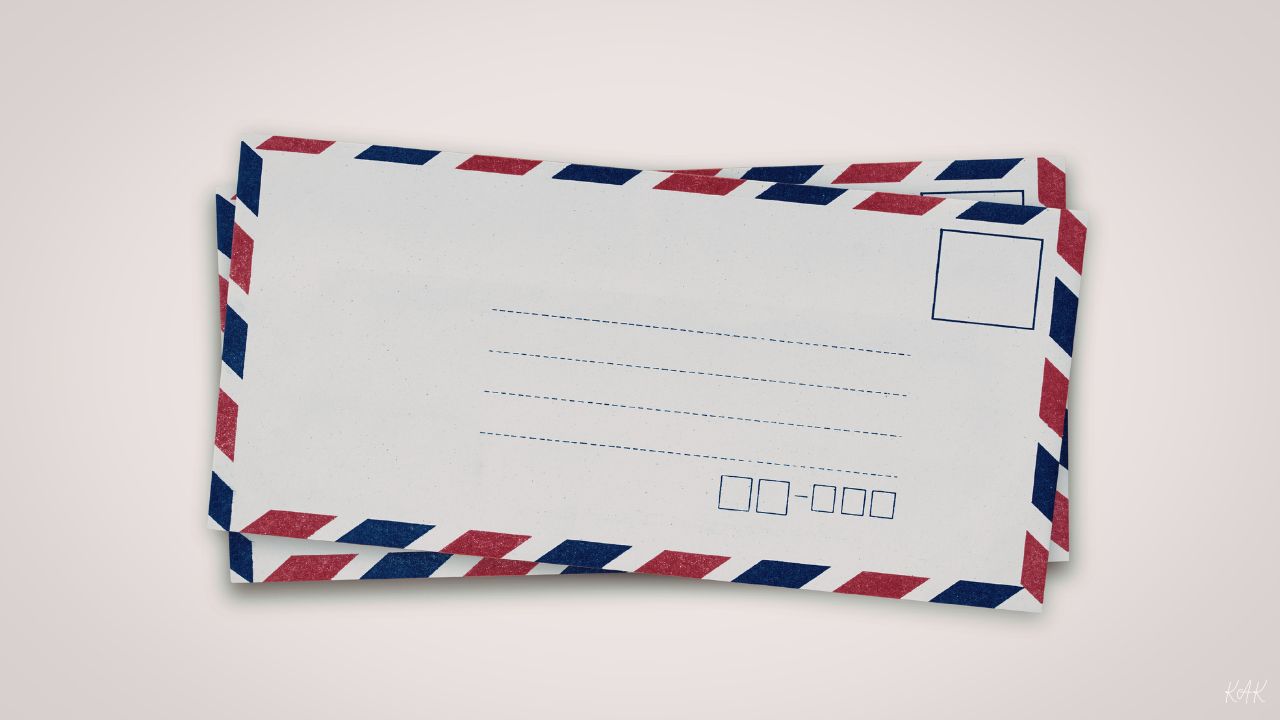
The sender’s address, also called the return address, goes in the upper left corner of the envelope. This tells the postal service where to return the mail if delivery fails. The recipient’s address goes in the center of the envelope, slightly lower than the middle. This placement gives postal workers and sorting machines a clear view of where the mail needs to go.
Postage always belongs in the upper right corner. The amount of postage depends on the size and weight of your envelope and whether you’re mailing domestically or internationally.
Writing the Return Address
Your return address should include three lines of information. The first line contains your full name. The second line holds your street address, including any apartment or unit numbers. The third line combines your city, state abbreviation, and ZIP code.
For example:
Sarah Johnson 742 Maple Street, Apt 3B Portland, OR 97205
Write the return address in smaller text than the recipient’s address. This helps distinguish between the two and prevents any confusion during mail sorting.
Formatting the Recipient’s Address
The recipient’s address is the most important part of your envelope. Write it clearly in the center, using slightly larger text than your return address. For domestic U.S. mail, you’ll typically use three to four lines.
The first line contains the recipient’s name. Use their full name when possible, and include any relevant titles. The second line holds the street address with the house or building number, street name, and any apartment, suite, or unit designation. The third line combines the city, state, and ZIP code.
Here’s a standard example:
Mr. David Chen 1458 Oak Boulevard, Suite 200 Austin, TX 78701
Always write the state as a two-letter abbreviation without periods. The postal service prefers this format because it works better with automated sorting equipment.
Addressing Envelopes for Different Recipients
Different situations call for different approaches to addressing. Here’s how to handle various common scenarios.
Addressing to individuals is straightforward. Use the person’s preferred title (Mr., Ms., Mrs., Dr., etc.) followed by their full name. If you’re unsure about someone’s preferred title, using their full name without a title is perfectly acceptable in most casual situations.
Addressing to married couples traditionally uses the format “Mr. and Mrs. John Smith.” However, many modern couples prefer both names listed: “Mr. John Smith and Mrs. Jane Smith” or simply “John and Jane Smith.” When spouses have different last names, list both full names on separate lines or connected with “and.”
Addressing to families can use “The Smith Family” or list the parents’ names with “and Family” added. For formal invitations, you might list each family member by name.
Addressing business correspondence typically includes the recipient’s name, their title, the company name, and then the address. For example:
Ms. Jennifer Williams Director of Marketing Brightside Communications 500 Commerce Drive Chicago, IL 60601
If you don’t know a specific person’s name, you can address mail to a department or use “Attn:” to direct it appropriately.
Special Addressing Situations
Certain circumstances require modified approaches to envelope addressing.
Sending to a P.O. Box means replacing the street address with the box number. Write “P.O. Box” followed by the number on the street address line. The city, state, and ZIP remain on the final line as usual.
Addressing mail “care of” someone is useful when your recipient is staying with someone else or receiving mail at another person’s address. Write the recipient’s name on the first line, then “c/o” followed by the host’s name on the second line, with the address below.
Maria Garcia c/o Robert Thompson 892 Pine Lane Denver, CO 80202
Military addresses use specific formats with APO (Army Post Office) or FPO (Fleet Post Office) designations instead of cities, and AA, AE, or AP instead of state abbreviations depending on the location.
International Mail Addressing
Sending mail abroad requires some adjustments to ensure smooth delivery across postal systems.
Write the recipient’s address according to the destination country’s customs. Address formats vary significantly around the world. Some countries place the postal code before the city, while others put it after. Some list the street number after the street name rather than before.
The crucial rule for international mail is to write the destination country’s name in capital letters on the last line of the address. This ensures the mail gets routed to the correct country first.
Jean-Pierre Dubois 15 Rue de la Paix 75002 Paris FRANCE
For the return address on international mail, include your full address with “USA” or “UNITED STATES” on the final line.
Tips for Clear, Readable Addressing
Legibility matters more than aesthetics when addressing envelopes. Postal workers and sorting machines need to read your writing quickly and accurately.
Use dark ink on light envelopes. Black or dark blue ink on white or cream envelopes provides the best contrast. Avoid using pencil, which can smudge, or light-colored inks that might not scan well.
Print rather than using cursive. While beautiful handwriting adds a personal touch, printed letters are easier to read, especially for automated sorting equipment.
Keep your lines straight and evenly spaced. You don’t need to be perfectly precise, but reasonably straight lines make the address easier to read at a glance.
Double-check spelling, especially for street names and cities. A misspelled address can delay your mail significantly or cause it to be returned.
Include the ZIP code. While mail can sometimes be delivered without it, including the correct ZIP code speeds up delivery and reduces the chance of errors.
Common Mistakes to Avoid
Several frequent errors can cause problems with mail delivery. Putting the return address in the wrong location sometimes confuses postal workers about which address is the destination. Always place it in the upper left corner.
Forgetting apartment or unit numbers is another common issue. If your recipient lives in a multi-unit building, including this information is essential for final delivery.
Using outdated addresses causes obvious problems. If you’re not certain about someone’s current address, verify it before sending important mail.
Writing too small or too cramped makes addresses difficult to read. Give your text enough space to be clearly legible.
Final Thoughts
Properly addressing an envelope is a simple skill that makes a real difference in whether your mail arrives safely and on time. Take an extra moment to write clearly, double-check the details, and use the correct format for your specific situation. Your recipients—and the postal workers handling your mail—will appreciate the care you’ve taken.
Related read: How to Kill Tooth Pain Nerve in 3 Seconds Permanently: Myths and Facts